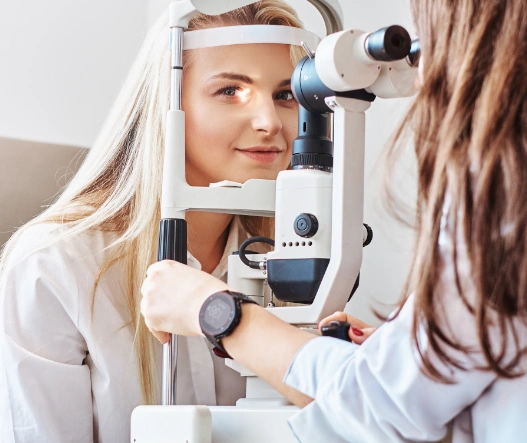
Why NYC Ophthalmologists Are Moving Toward RLE for Patients Over 50
For decades, LASIK has been the gold standard for vision correction. But if you’re in your late 40s or 50s, your eye surgeon might be recommending something different: Refractive Lens Exchange (RLE). And there’s a good reason why.
At NY LASIK, we’re seeing a significant shift in how we approach vision correction for this age group. It’s not that LASIK is bad, it’s that RLE is simply better suited to the unique vision challenges you face at this stage of life. More importantly, it solves a problem that LASIK can’t: the frustration of still needing reading glasses after surgery.
If you’re tired of pulling out readers at restaurants, feeling self-conscious on a first date, or fumbling for glasses in moments that matter, this article is for you. We’ll explain why RLE is gaining traction among NYC ophthalmologists and why it might be the vision correction solution you’ve been waiting for.
Why Vision Needs Change After 50
If you’re over 50, you’re likely dealing with presbyopia — and that changes which vision correction procedure is the right fit for you.
Understanding Presbyopia
Presbyopia is the age-related loss of your eye’s lens flexibility. Starting around age 40, your natural lens gradually hardens, making it increasingly difficult to focus on near objects. By 50, most people need reading glasses for everything from menus to smartphones.
Some vision correction procedures reshape the cornea for distance vision, but don’t restore the lens’s ability to focus at multiple distances — meaning reading glasses may still be needed.
The Cataract Problem
Here’s something many patients don’t realize: your natural lens is aging. Cataracts—clouding of the lens—typically develop in your 60s or 70s. If you have LASIK now and develop cataracts later, you’ll need cataract surgery. That’s a second surgery, more recovery time, and additional expense.
With RLE, you’re replacing your natural lens before cataracts become a problem. You’re essentially eliminating the risk of future cataract surgery. It’s preventive vision care.
Corneal Changes with Age
RLE works inside the eye rather than on the corneal surface, making it particularly well suited to the vision changes that come with age.
What Is Refractive Lens Exchange?
RLE is a surgical procedure that removes your eye’s natural lens and replaces it with a premium artificial intraocular lens (IOL). It’s similar to cataract surgery, but performed before cataracts significantly impair your vision.
The procedure takes about 15 minutes per eye and is performed under topical anesthesia. Your surgeon makes a small incision, removes your natural lens, and implants a custom IOL selected specifically for your vision needs and lifestyle.
The Premium IOL Advantage
Not all IOLs are created equal. Standard IOLs correct distance vision only. Premium IOLs—like multifocal and extended-range lenses—correct vision at multiple distances: far, intermediate, and near.
This is the game-changer for patients over 50. With the right premium IOL, you can see clearly at all distances without reading glasses. Some patients even achieve what we call “spectacle independence”—the ability to function without any glasses at all.
At NY LASIK, Dr. Leonard Bley specializes in premium lens procedures and has performed over 30,000 refractive procedures. He works with leading IOL manufacturers to select the best lens for each patient’s unique prescription and lifestyle.
Why Age 50+ Is the Ideal Time for RLE
If RLE is so great, why not do it at 40? The answer is simple: timing matters.
Presbyopia Is Already Here
By 50, presbyopia isn’t a future concern—it’s your present reality. You’re already experiencing the frustration of needing readers. RLE directly addresses this problem, restoring your ability to see at all distances. The procedure becomes a lifestyle upgrade, not just a medical intervention.
Your Prescription Has Stabilized
Vision changes most rapidly in your 20s and 30s. By 50, your refractive error (myopia, hyperopia, astigmatism) has stabilized. This means your RLE results will be predictable and long-lasting. There’s no risk of your prescription shifting significantly after surgery.
Cataract Development Is on the Horizon
Cataracts typically begin forming in your 60s. By choosing RLE at 50, you’re getting ahead of the curve. You avoid the scenario where you have LASIK at 50, then need cataract surgery at 70. Instead, you have one procedure that addresses both your current vision needs and prevents future cataract problems.
You Avoid a Second Surgery Later
This is huge. Many patients who had LASIK decades ago are now facing cataract surgery. They’re undergoing a second procedure, dealing with recovery again, and managing the costs. With RLE now, you eliminate this future burden entirely.
Quality of Life Improves Sooner
Why wait? If RLE can restore your vision and eliminate reading glasses, why not do it now and enjoy the benefits for the next 20-30 years? The longer you wait, the longer you’re dealing with presbyopia’s frustrations.
The RLE Advantage: What Sets It Apart
Full-Range Vision Restoration
LASIK corrects distance vision. RLE corrects distance, intermediate, and near vision—all in one procedure. With the right premium IOL, you can read a menu, see your phone clearly, and drive safely at night without glasses.
Cataract Prevention
By replacing your natural lens with an artificial one, you’re eliminating the risk of cataracts entirely. Your IOL won’t cloud over. This is a permanent solution that protects your vision for life.
Customizable Outcomes
Premium IOLs come in different designs. Multifocal lenses provide sharp vision at multiple distances. Extended-range lenses offer a continuous range of clear vision. Toric IOLs correct astigmatism. Your surgeon selects the lens that best matches your prescription, lifestyle, and visual priorities.
Permanent Results
Unlike LASIK, which can regress slightly over time, RLE results are permanent. Your IOL won’t change. Your vision correction is locked in for life.
Addresses Multiple Vision Problems Simultaneously
Many patients over 50 have multiple refractive errors: myopia, hyperopia, astigmatism, and presbyopia. RLE can correct all of them in one procedure. LASIK can’t do this as effectively, especially for presbyopia.
RLE is designed specifically for the vision challenges patients face after 50. It corrects distance, intermediate, and near vision in one procedure, eliminates the risk of future cataracts, and delivers permanent results. For patients in this age group, it’s often the most comprehensive solution available.
Who Is a Good Candidate for RLE?
RLE is ideal for patients who:
- Are 45 or older (ideally 50+)
- Have presbyopia and are tired of reading glasses
- Want to correct multiple refractive errors (myopia, hyperopia, astigmatism)
- Have a family history of cataracts
- Want a permanent, long-term vision solution
- Are willing to invest in premium IOL technology
- Have healthy eyes with no significant eye disease
Not ideal for:
- Patients under 40 with stable, mild prescriptions
- Those with certain eye conditions (advanced glaucoma, macular degeneration)
A comprehensive eye exam with Dr. Bley will determine if RLE is right for you.
The Lifestyle Benefit: Freedom From Reading Glasses
Let’s be honest: reading glasses are annoying. You lose them. You forget them. You feel self-conscious wearing them on dates or in professional settings. For active, socially engaged people in their 50s, this is a real quality-of-life issue.
RLE solves this. Patients report feeling more confident, more spontaneous, and more like themselves after the procedure. No more fumbling for readers at restaurants. No more squinting at your phone. No more feeling older than you are.
This isn’t just about vision—it’s about reclaiming your lifestyle.
Recovery and What to Expect
RLE recovery is straightforward:
- Immediately after: Your vision will be blurry. You’ll need someone to drive you home.
- First week: Vision improves daily. Most patients see well enough for daily activities within 3-5 days.
- 2-4 weeks: Vision stabilizes. You can resume most normal activities.
- 1-3 months: Final vision settles in. Some patients experience minor fluctuations during this period.
Post-op care includes:
- Antibiotic and anti-inflammatory eye drops (4 times daily for 2-4 weeks)
- Protective eyewear to prevent accidental rubbing
- Avoiding strenuous exercise and swimming for 1-2 weeks
- Regular follow-up appointments with Dr. Bley
Most patients are very happy with their results and report that the recovery process is manageable and well worth it.
Why NYC Ophthalmologists Are Recommending RLE
The shift toward RLE for patients over 50 isn’t random. It’s based on clinical evidence and real-world outcomes.
The data shows:
- RLE patients report higher satisfaction rates than LASIK patients over 50
- Premium IOL technology has advanced dramatically in the last 5-10 years
- Long-term studies demonstrate excellent safety and efficacy
- Patients appreciate the cataract prevention benefit
- The “no more reading glasses” outcome is life-changing for this demographic
Dr. Leonard Bley and the team at NY LASIK have seen this shift firsthand. With over 30,000 procedures performed, we’ve witnessed how RLE transforms vision and quality of life for patients in their 50s and beyond.
Addressing Common Concerns
“Will I still need glasses after RLE?” +
With the right premium IOL, most patients achieve spectacle independence for distance and near vision. Some may need glasses for specific tasks (like reading very small print in dim light), but the vast majority report rarely needing them.
“Is RLE safe?” +
Yes. RLE has been performed for decades and has an excellent safety profile. Serious complications are rare, especially when performed by experienced surgeons like Dr. Bley.
“How long do the results last?” +
Permanently. Your IOL won’t change or degrade over time.
“What about cost?” +
RLE costs more upfront, but eliminating future cataract surgery and decades of spectacle independence make it exceptional long-term value.
“Can I have RLE if I’ve already had LASIK?” +
Yes, though it’s more complex. If you’re considering RLE after LASIK, discuss this with Dr. Bley during your consultation.
Frequently Asked Questions
What’s the difference between RLE and cataract surgery? +
RLE is performed on a clear lens before cataracts develop. Cataract surgery is performed on a clouded lens. The surgical technique is similar, but the timing and indication are different.
Can I choose which eye to have done first? +
Yes. Most surgeons recommend doing one eye first, allowing it to heal before operating on the second eye. This also lets you experience the results before committing both eyes.
How do I know if I’m a good candidate? +
Schedule a comprehensive consultation with Dr. Bley. He’ll evaluate your prescription, eye health, lifestyle, and visual priorities to determine if RLE is right for you.
What if my prescription changes after RLE? +
While rare, minor prescription changes can occur. If needed, a secondary procedure (like LASIK on the cornea) can fine-tune your vision. However, most patients don’t need this.
The Bottom Line
If you’re over 50 and tired of reading glasses, RLE is worth serious consideration. It’s not just a vision correction procedure—it’s a lifestyle upgrade that restores your visual freedom and prevents future cataract problems.
NYC ophthalmologists, particularly those serving patients in Brooklyn and Manhattan, are recommending RLE for this age group because the evidence is clear: it delivers superior outcomes compared to LASIK for patients with presbyopia.
Ready to explore if RLE is right for you? Schedule a consultation with Dr. Leonard Bley at NY LASIK. Dr. Bley specializes in premium lens procedures and will help you understand your options and achieve the clear, glasses-free vision you deserve.