LASIK vs PRK vs SMILE vs EVO: Which Procedure Is Best for Your Eyes?
Choosing the right vision correction procedure can feel overwhelming. You’ve likely heard about LASIK, but did you know there are now several advanced alternatives—including PRK, SMILE, and EVO ICL™—each with distinct advantages depending on your eye health, lifestyle, and vision goals?
The good news? You don’t have to choose blindly. This comprehensive guide breaks down each procedure, compares their key differences, and helps you understand which option might be best for your unique situation. Whether you have thin corneas, an active lifestyle, or simply want to explore all your options, we’ll walk you through everything you need to know.
What Are Vision Correction Procedures and Why Do You Need Them?
Vision correction procedures reshape your cornea or implant a lens to correct refractive errors—conditions where your eye doesn’t focus light properly on the retina. These errors include:
- Myopia (nearsightedness) — You see nearby objects clearly but struggle with distance vision
- Hyperopia (farsightedness) — Distant objects are clear, but close-up vision is blurry
- Astigmatism — Blurred vision at all distances due to an irregularly shaped cornea
- Presbyopia (age-related) — Difficulty focusing on close objects as you age
Rather than relying on glasses or contacts indefinitely, these procedures offer a permanent solution—potentially giving you clear vision for decades.
LASIK vs. PRK vs. SMILE vs. EVO ICL: A Detailed Comparison
LASIK (Laser-Assisted In Situ Keratomileusis)
How It Works:
LASIK eye surgery is the most popular vision correction procedure, accounting for millions of surgeries worldwide. During LASIK, your surgeon creates a thin corneal flap using a microkeratome or femtosecond laser, then uses an excimer laser to reshape the underlying corneal tissue. The flap is then repositioned, acting as a natural bandage.
Recovery Time:
One of LASIK’s biggest advantages is rapid recovery. Most patients experience significantly improved vision within 24 hours, with full stabilization in 3-6 months.
Best For:
- Patients with normal to thick corneas
- Those seeking quick recovery and minimal downtime
- People with moderate to high refractive errors
- Individuals who want proven, long-term results
Advantages:
- Fastest visual recovery (24 hours)
- Minimal discomfort during healing
- Excellent long-term stability
- Widely available and extensively studied
- Suitable for most refractive errors
Limitations:
- Not ideal for thin corneas (requires adequate corneal thickness)
- Corneal flap creation carries small risks (flap complications are rare but possible)
- May not be suitable for contact sports athletes (though many do pursue LASIK)
- Dry eye symptoms can occur temporarily post-surgery
Cost Range: $1,500–$3,000 per eye (varies by provider and technology)
PRK (Photorefractive Keratectomy)
How It Works:
PRK is the original laser eye surgery and remains an excellent option for specific patient populations. Unlike LASIK, PRK doesn’t create a corneal flap. Instead, the surgeon removes the corneal epithelium (outer layer) and uses an excimer laser to reshape the underlying corneal tissue. A protective contact lens is placed temporarily to aid healing.
Recovery Time:
PRK has a longer recovery period than LASIK. Vision improvement is gradual, typically taking 1-2 weeks for functional vision and 3-6 months for full stabilization. Some patients experience mild discomfort during the first few days.
Best For:
- Patients with thin corneas
- Athletes and contact sports enthusiasts
- Those with corneal irregularities or scarring
- Patients seeking a flap-free procedure
- Military and law enforcement personnel
Advantages:
- No corneal flap creation (eliminates flap-related risks)
- Preserves corneal tissue
- Excellent for thin corneas
- Superior for active individuals and athletes
- Long-term vision outcomes rival LASIK
- Reversible in some cases
Limitations:
- Slower visual recovery (1-2 weeks for functional vision)
- More initial discomfort in the early healing phase
- Possible temporary haze (usually resolves within weeks)
- Requires more post-operative care and follow-ups
- Not ideal if you need immediate clear vision
Cost Range: $1,500–$3,000 per eye (similar to LASIK, sometimes slightly lower)
SMILE (Small Incision Lenticule Extraction)
How It Works:
SMILE LASIK represents the newest generation of laser eye surgery. Using advanced femtosecond laser technology, your surgeon creates a small lenticule (a disc-shaped piece of corneal tissue) within your cornea, then extracts it through a tiny 2-3mm incision. This minimally invasive approach preserves corneal strength and stability.
Recovery Time:
SMILE offers recovery speed comparable to LASIK, with most patients achieving functional vision within 24-48 hours and full stabilization in 3-6 months.
Best For:
- Patients with thin or borderline corneas
- Those ineligible for LASIK due to corneal concerns
- Active individuals and athletes
- People seeking the most minimally invasive procedure
- Patients with high myopia (nearsightedness)
Advantages:
- Minimal corneal disruption (only 2-3mm incision)
- Preserves corneal biomechanical strength
- Excellent for thin corneas
- Fast recovery
- Reduced dry eye risk
- Advanced technology with excellent outcomes
- Ideal for contact sports and high-impact activities
Limitations:
- Newer technology with less long-term data
- Limited availability (fewer surgeons trained in SMILE)
- Slightly higher cost due to advanced technology
- Steeper learning curve for surgeons
Cost Range: $2,000–$3,500 per eye (typically higher than LASIK/PRK)
EVO ICL (Implantable Contact Lens)
How It Works:
EVO ICL is fundamentally different from laser procedures. Rather than reshaping your cornea, a biocompatible lens is surgically implanted between your iris and natural lens. It functions like a permanent contact lens, correcting your vision while preserving your corneal tissue entirely.
Recovery Time:
EVO ICL offers rapid recovery, with most patients experiencing clear vision within 24-48 hours and full stabilization in 1-3 months.
Best For:
- Patients with thin corneas unsuitable for laser surgery
- Those with very high refractive errors (beyond LASIK/PRK limits)
- Individuals seeking a reversible procedure
- People with dry eye concerns
- Those wanting to preserve corneal tissue
- Patients with corneal irregularities or keratoconus
Advantages:
- Preserves all corneal tissue (no reshaping)
- Reversible (can be removed or replaced)
- Excellent for thin corneas and high refractive errors
- Provides UV protection
- Fast recovery and minimal discomfort
- Stable, long-term vision correction
- No dry eye complications
- Suitable for patients ineligible for laser surgery
Limitations:
- Surgical implantation (more invasive than laser procedures)
- May require more post-op visits than LASIK
- Higher cost than laser procedures
- Not suitable for all refractive errors
- Requires careful patient selection and counseling
Cost Range: $4,000–$5,000 per eye (most expensive option)
Comparison Table: Quick Reference
| Factor | LASIK | PRK | SMILE | EVO ICL |
|---|---|---|---|---|
| Recovery Time | 24 hours | 1-2 weeks | 24-48 hours | 24-48 hours |
| Corneal Flap | Yes | No | No | N/A (implant) |
| Ideal for Thin Corneas | No | Yes | Yes | Yes |
| Best for Athletes | Moderate | Excellent | Excellent | Excellent |
| Reversible | No | No | No | Yes |
| Long-term Data | Extensive (30+ years) | Extensive (30+ years) | Limited (10+ years) | Moderate (15+ years) |
| Cost | $1,500–$3,000 | $1,500–$3,000 | $2,000–$3,500 | $3,000–$5,000 |
| Dry Eye Risk | Moderate | Low | Very Low | None |
Which Procedure Is Best for You? Key Decision Factors
Choosing the right procedure depends on several personal and medical factors:
1. Corneal Thickness and Health
- Thick, healthy corneas: LASIK is an excellent choice
- Thin corneas: PRK, SMILE, or EVO ICL are safer alternatives
- Corneal irregularities: PRK or EVO ICL may be preferable
2. Refractive Error Severity
- Mild to moderate errors: All four procedures work well
- High myopia (severe nearsightedness): SMILE or EVO ICL excel
- High hyperopia (severe farsightedness): LASIK or EVO ICL are better options
3. Lifestyle and Activity Level
- Sedentary lifestyle: LASIK offers the fastest recovery
- Contact sports or high-impact activities: PRK, SMILE, or EVO ICL provide excellent corneal stability
- Military or law enforcement: PRK is often preferred due to its flap-free design
4. Recovery Time Needs
- Need clear vision immediately: LASIK or SMILE (24-48 hours)
- Can tolerate gradual improvement: PRK (1-2 weeks)
- Want the most reversible option: EVO ICL
5. Dry Eye Concerns
- History of dry eyes: SMILE or EVO ICL minimize this risk
- Mild dry eye: PRK is a good alternative depending on your eye health and goals
- Severe dry eye: EVO ICL is the safest choice
6. Long-term Vision Stability
- Want proven 30+ year data: LASIK or PRK
- Comfortable with 10-15 year data: SMILE or EVO ICL
- Want reversibility: EVO ICL
7. Budget Considerations
- Most affordable: LASIK and PRK ($1,500–$3,000)
- Mid-range: SMILE ($2,000–$3,500)
- Premium option: EVO ICL ($3,000–$5,000)
What to Expect During Your Consultation
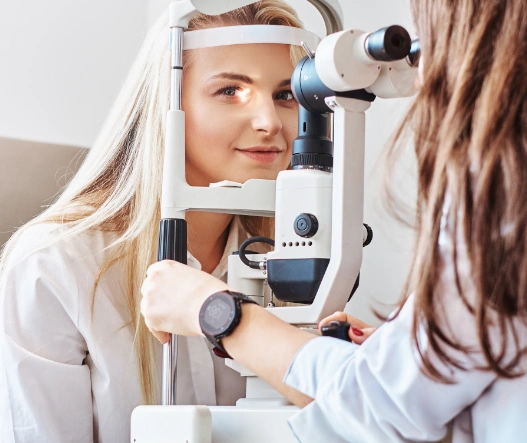
Your eye surgeon will conduct a comprehensive evaluation to determine your candidacy and recommend the best procedure for your situation. Here’s what typically happens:
Pre-Operative Testing:
- Corneal topography (detailed corneal mapping)
- Pachymetry (corneal thickness measurement)
- Wavefront analysis (detailed vision mapping)
- Pupil dilation and retinal examination
- Dry eye assessment
- Intraocular pressure measurement
Discussion Topics:
- Your vision goals and lifestyle needs
- Medical history and current medications
- Realistic expectations for outcomes
- Potential risks and complications
- Recovery timeline and activity restrictions
- Cost and financing options
Surgeon Recommendation:
Based on your test results and personal factors, your surgeon will recommend the procedure most likely to achieve your vision goals safely.
Common Questions About Vision Correction Procedures
Can I have both eyes done on the same day?
Yes, most surgeons perform both eyes during the same procedure session. This is safe and convenient.
Will my vision be perfect after surgery?
Most patients achieve 20/20 vision or better, but individual results vary. Some may still need glasses for specific tasks (reading or night driving).
How long do the results last?
LASIK, PRK, and SMILE results are typically permanent. However, age-related changes (presbyopia) may require reading glasses later in life. EVO ICL can be replaced if needed.
Can I have the procedure reversed if I’m unhappy?
LASIK, PRK, and SMILE are not reversible, though enhancements are possible. EVO ICL is reversible—the lens can be removed or replaced.
Am I too old for vision correction surgery?
Age alone doesn’t disqualify you. Your eye health, corneal thickness, and overall health matter more. Many patients in their 50s, 60s, and beyond successfully undergo these procedures.
Will I need glasses after surgery?
Most patients won’t need glasses for distance vision. However, reading glasses may be necessary as you age due to presbyopia (a natural age-related change).
Take the Next Step: Schedule Your Consultation
The best way to determine which procedure is right for you is to schedule a comprehensive consultation with an experienced refractive surgeon. During this appointment, advanced testing will reveal your corneal thickness, refractive error severity, and overall eye health—allowing your surgeon to make a personalized recommendation.
At NY LASIK, Dr. Bley has performed more than 100,000 vision correction procedures and brings deep experience to every consultation, helping guide patients toward the option that best matches their vision goals, lifestyle, and eye health. We offer all four procedures and will help you make an informed decision based on your unique situation.
Ready to see clearly without glasses or contacts? Schedule a free consultation with NY LASIK today. Your surgeon will help you choose. Start with a free consultation and take the first step toward visual freedom.