Dry Eye and Screen Time: A NYC Professional’s Survival Guide

You’re three hours into your workday in a Manhattan office tower, staring at spreadsheets and Slack messages. Your eyes feel gritty. Your vision blurs when you glance at the window. By 5 PM, you’re reaching for eye drops like they’re coffee—except they barely help anymore.
If this sounds familiar, you’re not alone. Studies show that screen time reduces your blink rate by up to 66%, and New York’s professional workforce—from finance to tech to law—spends an average of 7-9 hours daily on digital devices. The result? Digital eye strain and dry eye disease have become an occupational hazard for NYC professionals.
The good news: you don’t have to choose between your career and comfortable vision. This guide walks you through proven strategies to protect your eyes, when home remedies stop working, and how advanced diagnostic technology can finally identify what’s actually causing your symptoms.
Why Screen Time Dries Out Your Eyes: The Science Behind the Strain
The Blink Rate Problem
When you focus on a screen, something remarkable happens to your eyes—they stop blinking normally. Your blink rate drops from the healthy baseline of 15-20 blinks per minute to just 5-8 blinks. Each blink spreads a protective tear film across your eye’s surface. Fewer blinks mean less lubrication, and less lubrication means dry, irritated eyes.
This isn’t a minor inconvenience. Your tears aren’t just water—they’re a complex mixture of oils, water, and mucus that protect your cornea and keep your vision sharp. When screen time disrupts your blinking, you’re literally starving your eyes of essential moisture.
The Accommodation Trap
Your eyes also work harder when viewing screens. Unlike reading a printed page, digital screens emit light and require constant focus adjustments. This sustained close-up focus—called accommodation—fatigues the ciliary muscles in your eye and triggers the symptoms most NYC professionals recognize: headaches, blurred vision, and that characteristic “tired eye” feeling by mid-afternoon.
Blue Light and Glare
While blue light itself doesn’t directly cause dry eye disease, the glare from screens and the brightness of digital displays can increase eye strain and make existing dryness feel worse. Add Manhattan’s floor-to-ceiling office windows and overhead fluorescent lighting, and your eyes are working in a perfect storm of visual stress.
The 20-20-20 Rule: Your First Line of Defense
The simplest, most effective strategy for screen-related dry eye is also the easiest to implement: the 20-20-20 rule.
Every 20 minutes, look at something 20 feet away for at least 20 seconds.
Here’s why it works:
- Resets accommodation: Looking at distance objects relaxes the ciliary muscles, reducing eye fatigue
- Triggers natural blinking: When you shift your gaze, you blink more frequently, rehydrating your eyes
- Gives your visual system a break: Your eyes need periodic rest from sustained focus, just like your body needs breaks from sitting
How to make it stick in a busy NYC office:
- Set a phone reminder for every 20 minutes
- Use your calendar app to block “eye break” time
- Step away from your desk and look out the window (bonus: you get a mental break too)
- If you can’t leave your desk, simply look at a poster or object across the room
Most professionals find that after just one week of consistent 20-20-20 breaks, their afternoon eye strain noticeably improves.
Optimize Your Workspace: The Ergonomic Approach
Your office environment plays a massive role in eye comfort. Small adjustments can make a dramatic difference.
Monitor Positioning
Position your screen so that:
- The top of the monitor is at or slightly below eye level (not above—looking down reduces eyelid opening and tear evaporation)
- The screen is 20-26 inches away from your eyes (roughly an arm’s length)
- The screen is tilted slightly upward (about 15-20 degrees) to reduce glare from overhead lights
Lighting and Glare Control
- Reduce overhead fluorescent lighting if possible; ask your office manager about task lighting instead
- Position your monitor perpendicular to windows to minimize glare
- Adjust screen brightness to match your surrounding environment (not brighter than the room)
- Use an anti-glare screen filter if you work near windows or under bright lights
Humidity and Air Quality
- Keep a humidifier near your desk if your office has dry air (common in NYC buildings with central HVAC)
- Avoid sitting directly under air conditioning vents or near heating units, which dry out the air
- Stay hydrated: Drink 8-10 glasses of water daily; dehydration worsens dry eye symptoms
Blink Reminders
Some professionals find it helpful to:
- Use blink-reminder software that prompts you to blink at intervals
- Practice conscious blinking exercises: Blink slowly and deliberately 10 times every hour
- Use the “palming” technique: Cover your eyes with your palms for 10 seconds to rest them and encourage tear production
When Home Remedies Aren’t Enough: Recognizing Persistent Dry Eye
If you’ve been following the 20-20-20 rule, optimized your workspace, and stayed hydrated for 2-3 weeks but still experience:
- Persistent dryness or grittiness throughout the day
- Blurred vision that doesn’t improve with blinking
- Redness or irritation that worsens as the day progresses
- Watery eyes (paradoxically, dry eye can trigger excessive tearing as a reflex response)
- Discomfort that interferes with your work or quality of life
…then you likely have dry eye disease, not just temporary digital eye strain.
This is the critical moment when home remedies stop being enough, and professional evaluation becomes essential.
Why Over-the-Counter Drops Often Fail
Many professionals rely on drugstore artificial tears, but here’s the problem: not all dry eye is the same. Some people have insufficient tear volume. Others have poor tear quality—their tears evaporate too quickly because they lack the protective oil layer. Still others have meibomian gland dysfunction, where the glands that produce tear oils are blocked or inflamed.
Using the wrong type of artificial tears for your specific condition is like treating a bacterial infection with antiviral medication—it won’t work, no matter how often you apply it.
Advanced Diagnostics: Measuring What You Can’t See
This is where most NYC eye care practices fall short. They treat symptoms without identifying the root cause.
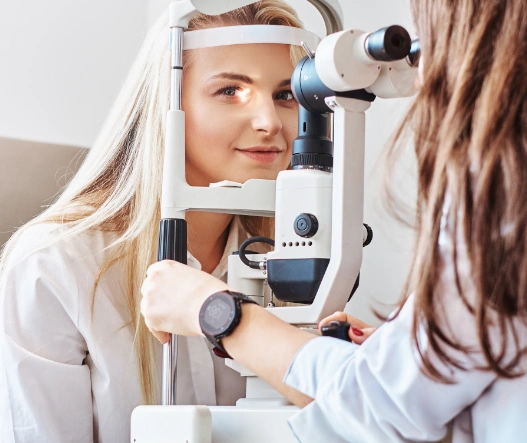
At NY LASIK, we use LipiView II imaging technology to actually measure your tear film composition and meibomian gland function. Instead of guessing whether your dry eye is caused by low tear volume, poor tear quality, or gland dysfunction, LipiView II shows us exactly what’s happening at the microscopic level.
What LipiView II Reveals
- Tear film lipid layer thickness: The protective oil layer that prevents tear evaporation
- Meibomian gland structure: Whether your oil-producing glands are healthy or blocked
- Tear volume and stability: How long your tears stay on your eye surface before evaporating
This diagnostic precision allows us to recommend targeted treatments—whether that’s prescription eye drops, in-office procedures like meibomian gland expression, or lifestyle modifications tailored to your specific condition.
The difference: Instead of trying random solutions, you get a treatment plan based on objective data about your eyes.
Professional Dry Eye Treatment: Beyond Over-the-Counter Drops
Dry eye complaints are the number-one reason people schedule appointments with ophthalmologists—yet most practices send patients away with over-the-counter eye drops, temporarily masking symptoms without ever addressing the underlying cause.
At NY LASIK, we take a different approach to dry eye treatment. Our clinical team has the advanced training and cutting-edge technology necessary to develop an effective, personalized dry eye treatment plan for each patient. Rather than treating symptoms, we treat the root cause.
OptiPLUS and OptiLight: Dual-Technology Innovation
We offer the most advanced dry eye treatments available through OptiPLUS and OptiLight technologies—a combination that delivers unmatched clinical results for dry eye patients.
OptiPLUS is a dual-frequency radiofrequency device that enhances blood circulation and directly targets the meibomian glands to improve outcomes. Dr. Minh Vu, the only OD in Manhattan providing this treatment, uses OptiPLUS to restore gland function and reduce inflammation at the source.
OptiLight employs light-based technology to address the inflammation caused by meibomian gland dysfunction. Together, OptiPLUS and OptiLight provide comprehensive treatment that tackles both the mechanical blockage and inflammatory component of dry eye disease—something over-the-counter drops simply cannot do.
Why this matters for NYC professionals: Most dry eye treatments require multiple sessions over weeks or months. OptiPLUS and OptiLight can deliver significant relief in just a few sessions, allowing you to get back to your busy schedule without prolonged treatment protocols.
LipiFlow®: FDA-Approved Meibomian Gland Restoration
For patients with meibomian gland dysfunction (MGD)—one of the most common causes of dry eye in screen-heavy professionals—we offer LipiFlow® Activator, an FDA-approved treatment that uses Vectored Thermal Pulse™ (VTP) technology.
Here’s how it works: LipiFlow delivers controlled heat and gentle pressure to the inner eyelid, effectively clearing blockages in the meibomian glands that produce the protective oil layer of your tears. Unlike manual gland expression (which can be uncomfortable and inconsistent), LipiFlow treats both eyelids simultaneously with precision.
The result: Most patients experience significant dry eye relief after just one quick session. No downtime. No prolonged treatment course. Just restored gland function and improved tear quality.
Additional Advanced Treatment Options
Depending on your specific diagnosis, we may recommend:
- Punctal Plugs: Tiny biocompatible devices inserted into tear drainage ducts to preserve your natural tears on the eye surface longer
- Amniotic Tissue Application: Uses healing properties of amniotic tissue to reduce inflammation and promote corneal healing in severe dry eye cases
- Allograft Tissue Contact Lenses: Specialized therapeutic lenses that protect the eye surface while promoting healing
- Allergy Testing: Identifies whether allergies are contributing to your dry eye symptoms, allowing us to address the root cause
Why Advanced Diagnostics Lead to Better Treatment
The key difference between NY LASIK’s approach and typical eye care practices is this: we diagnose before we treat.
Using LipiView II imaging, we identify exactly which component of your tear system is failing—whether it’s tear volume, tear quality, gland blockage, or inflammation. This diagnostic precision means we recommend the right treatment the first time, not after months of trial-and-error with ineffective drops.
For a Manhattan finance professional with meibomian gland dysfunction, that might mean LipiFlow. For someone with inflammatory dry eye, OptiLight might be the answer. For another patient, punctal plugs combined with prescription medication could be ideal.
The bottom line: Your treatment is customized to your specific condition, not a one-size-fits-all
The NYC Professional’s Action Plan
Here’s a practical timeline for addressing screen-related dry eye:
Week 1-2: Implement Prevention
- Start the 20-20-20 rule immediately
- Optimize your workspace (monitor position, lighting, humidity)
- Increase water intake to 8-10 glasses daily
- Use quality artificial tears (preservative-free, if possible)
Week 3-4: Assess Progress
- Track your symptoms daily (dryness, blurriness, discomfort on a 1-10 scale)
- If symptoms improve by 50% or more, continue prevention strategies
- If symptoms persist or worsen, schedule a professional evaluation
Week 5+: Professional Evaluation
- See an eye care specialist who can perform advanced diagnostics
- Get LipiView II imaging to identify the root cause
- Receive a personalized treatment plan based on your specific condition
- Follow up in 4-6 weeks to assess treatment effectiveness
Why NYC Professionals Choose Advanced Diagnostics
You wouldn’t ignore chest pain and just take antacids forever. Similarly, persistent dry eye deserves a proper diagnosis, not endless trial-and-error with over-the-counter drops.
Advanced diagnostic technology like LipiView II is particularly valuable for NYC professionals because:
- It saves time: Instead of trying multiple treatments, you get the right one immediately
- It’s objective: Your treatment is based on measurable data, not guesswork
- It prevents complications: Untreated dry eye disease can lead to corneal damage and vision loss
- It improves quality of life: When you finally address the root cause, the relief is dramatic
Frequently Asked Questions
Is dry eye from screen time permanent?
No. With proper prevention and treatment, most professionals see significant improvement within 4-6 weeks. The key is addressing the root cause, not just treating symptoms.
Can I prevent dry eye entirely if I work on screens all day?
You can dramatically reduce your risk by following the 20-20-20 rule, optimizing your workspace, and staying hydrated. Some people are more prone to dry eye due to genetics or other factors, but prevention strategies help everyone.
Are blue light glasses worth it?
While blue light glasses don’t prevent dry eye disease, some people find they reduce eye strain and improve sleep quality if worn in the evening. They’re not a cure, but they can be a helpful addition to other strategies.
How often should I see an eye doctor if I have dry eye?
If you have diagnosed dry eye disease, follow-up appointments every 4-6 weeks initially are typical. Once your condition is stable, annual or semi-annual visits usually suffice.
What’s the difference between dry eye and digital eye strain?
Digital eye strain is temporary discomfort from screen use that improves with rest. Dry eye disease is a chronic condition where your eyes don’t produce enough tears or produce poor-quality tears. They often occur together, but they require different treatments.
Take the Next Step: Get a Proper Diagnosis
If you’ve been struggling with dry eyes from screen time, you don’t have to keep guessing at solutions. Advanced diagnostic technology can finally show you what’s actually happening with your tears and meibomian glands.
Schedule a consultation with NY LASIK today. Our experienced ophthalmologists use LipiView II imaging to diagnose the root cause of your dry eye and create a personalized treatment plan. We have convenient locations in Manhattan and Brooklyn, with flexible scheduling for busy professionals.
Your eyes work hard for you every day. They deserve expert care.