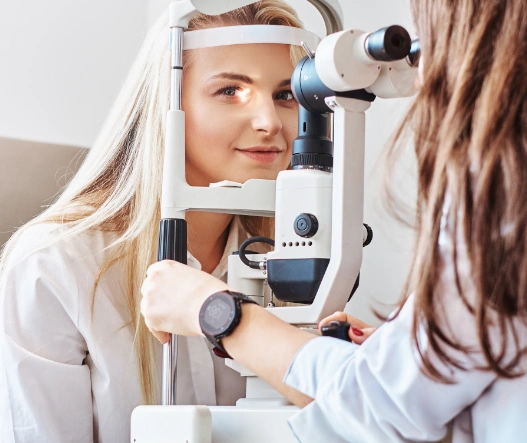
Dry Eye and Contact Lens Wear: When to Explore Better Options
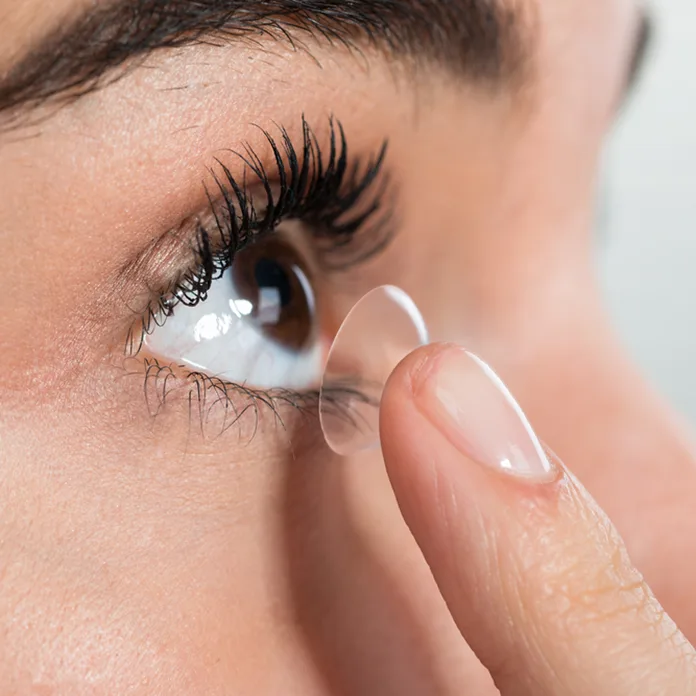
If you’re a contact lens wearer in New York, Manhattan, or Brooklyn experiencing persistent dry, irritated eyes, you’re not alone. Contact lens-induced dry eye (CLIDE) is one of the most common complaints among contact lens users—and it’s a problem that doesn’t always have a simple fix. While artificial tears and lens adjustments can help, there comes a point when managing symptoms becomes exhausting. That’s when it’s worth exploring better, more permanent solutions.
At NY LASIK, we work with hundreds of patients every year who’ve reached that breaking point with contacts. Many discover that the real solution isn’t a better drop or a different lens type—it’s moving beyond contacts altogether. This guide walks you through why contacts cause dry eyes, what you can do to manage the problem, and when it’s time to consider permanent vision correction options like LASIK or EVO ICL™.
Why Do Contact Lenses Cause Dry Eyes?
Understanding the root cause of contact lens-induced dry eye is the first step toward finding a real solution.
The Oxygen Barrier Problem
Contact lenses sit directly on your cornea, creating a physical barrier between your eye’s surface and the air. This barrier reduces the amount of oxygen that reaches your cornea—especially with traditional soft lens materials that have lower oxygen permeability. When your cornea doesn’t get enough oxygen, it triggers inflammation and disrupts your tear film, the delicate layer of moisture that keeps your eyes comfortable.
The longer you wear your lenses each day, the more pronounced this oxygen deprivation becomes. By evening, many contact lens wearers experience noticeable dryness and discomfort.
The Tear Film Disruption
Your tear film isn’t just water—it’s a complex three-layer system made up of oils, water, and mucus. Contact lenses can disrupt this balance in several ways:
- Lens absorption: Soft contact lenses absorb moisture from your tear film, pulling hydration away from your eye’s surface
- Reduced blinking: Contact lens wearers blink less frequently and less completely, reducing tear distribution
- Tear evaporation: Lenses can increase tear evaporation rates, especially in dry climates or during extended screen time
- Protein buildup: Over time, proteins and debris accumulate on lens surfaces, further irritating the eye
Individual Risk Factors
Not everyone experiences contact lens-induced dry eye equally. Your risk increases if you have:
- Pre-existing dry eye: If you already have naturally dry eyes, contacts will likely make it worse
- Age: Tear production naturally decreases with age, making older contact lens wearers more susceptible
- Extended wear schedules: Wearing lenses 12+ hours daily significantly increases dry eye risk
- Certain medications: Antihistamines, decongestants, and some blood pressure medications reduce tear production
- Environmental factors: Low humidity, air conditioning, heating, and wind all accelerate tear evaporation
- Screen time: Hours spent on computers and phones reduce blinking and worsen dryness
Recognizing Contact Lens-Induced Dry Eye
Dry eye symptoms can range from mild irritation to significant discomfort that interferes with daily life. If you experience any of these signs, it’s time to take action:
Common Symptoms
- Stinging or burning sensation during or after lens wear
- Grittiness or foreign body sensation (feeling like something’s in your eye)
- Redness in the whites of your eyes
- Blurred or fluctuating vision that improves with blinking
- Light sensitivity or discomfort in bright environments
- Excessive tearing (paradoxically, dry eyes can trigger reflex tearing)
- Difficulty wearing lenses for a full day—needing to remove them early
- Increased lens discomfort as the day progresses
When Symptoms Signal a Bigger Problem
If you’re experiencing any of these red flags, schedule a consultation with an eye care professional:
- Symptoms that persist even after switching lens types or brands
- Discomfort that worsens despite using artificial tears multiple times daily
- Visible redness or inflammation that doesn’t resolve with rest
- Changes in vision quality that aren’t corrected by lens adjustment
- Symptoms that are affecting your work, school, or quality of life
The Wetting Drop Cycle: Why Temporary Relief Isn’t Enough
Many contact lens wearers fall into a frustrating pattern: use rewetting drops in the morning, use them again mid-day, use them before bed. This cycle can continue indefinitely, with drops providing only temporary relief.
Here’s why this approach fails long-term:
The Problem with Rewetting Drops:
Rewetting drops hydrate your lenses temporarily, but they don’t address the underlying issue—your lenses are still blocking oxygen, still disrupting your tear film, and still causing inflammation. You’re treating the symptom, not the cause. Over time, many patients find they need drops more frequently, or that drops stop working altogether.
The Escalation Cycle:
- Morning: Dry eyes, use rewetting drops
- Mid-day: Dryness returns, use drops again
- Afternoon: Increasing discomfort, consider removing lenses early
- Evening: Significant irritation, use drops before bed
- Next morning: Cycle repeats, often with worsening symptoms
This cycle can persist for months or years, with patients spending money on drops, dealing with constant discomfort, and never actually solving the problem. At some point, the question shifts from “How do I manage this?” to “Why am I still wearing contacts?”
Managing Dry Eyes While Wearing Contacts: Short-Term Solutions
If you’re not ready to move away from contacts, there are evidence-based strategies that can help reduce discomfort:
Switch to Daily Disposable Lenses
Daily disposables are often the best lens choice for dry eye sufferers because:
- Fresh lens every day: No protein or debris buildup that accumulates with extended-wear lenses
- Higher water content: Many daily disposables use advanced materials with superior moisture retention
- Better oxygen permeability: Newer silicone hydrogel daily lenses allow more oxygen to reach your cornea
- Reduced handling: Less time spent inserting, removing, and cleaning lenses means less irritation
If you’re currently wearing weekly or monthly lenses, switching to daily disposables often provides immediate relief.
Optimize Your Lens Wear Schedule
- Reduce daily wear time: Aim for 8-10 hours maximum instead of 12-14 hours
- Take regular breaks: Remove your lenses for at least 1-2 hours mid-day if possible
- Never sleep in contacts: Even “extended wear” lenses should be removed nightly to allow corneal oxygen recovery
- Plan lens-free days: Designate 1-2 days per week to wear glasses instead, giving your eyes a complete break
Use Preservative-Free Artificial Tears
- Choose the right drops: Look for preservative-free formulations specifically designed for contact lens wearers
- Apply before insertion: Wet your lenses before putting them in your eyes
- Reapply throughout the day: Use drops every 2-3 hours, not just when symptoms appear
- Avoid rewetting drops with preservatives: These can accumulate on your lenses and cause irritation
Address Environmental and Lifestyle Factors
- Stay hydrated: Drink plenty of water throughout the day to support tear production
- Manage screen time: Follow the 20-20-20 rule—every 20 minutes, look at something 20 feet away for 20 seconds
- Use a humidifier: Especially in winter or in air-conditioned offices
- Avoid smoke and wind: These environmental factors accelerate tear evaporation
- Blink consciously: Make a deliberate effort to blink fully and frequently, especially during screen time
Maintain Proper Lens Hygiene
- Replace your lens case monthly: Old cases harbor bacteria and protein buildup
- Use fresh solution daily: Never reuse solution from your case
- Clean your lenses properly: Follow your eye care provider’s instructions exactly
- Wash your hands before handling lenses: Contamination can cause irritation and infection
When It’s Time to Consider Permanent Vision Correction
If you’ve tried these strategies and still experience persistent dry eye, it’s worth asking yourself: Why am I still managing a problem instead of solving it?
This is where permanent vision correction becomes attractive. Unlike contacts, LASIK and EVO ICL don’t sit on your cornea, don’t disrupt your tear film, and don’t require daily management. For many patients with contact lens-induced dry eye, these procedures offer genuine relief.
LASIK: Important Considerations for Dry Eye Patients
LASIK uses a laser to reshape your cornea, correcting your vision permanently. However, it’s important to understand that LASIK can cause or temporarily worsen dry eye, especially in the immediate post-operative period.
How LASIK Affects Tear Production:
During LASIK, the surgeon creates a corneal flap and uses a laser to reshape the underlying tissue. This process can temporarily disrupt corneal nerves that signal tear production, leading to reduced tear output for several weeks to months after surgery. Most patients experience improved tear production within 3-6 months, but some experience persistent dry eye.
Who Should Consider LASIK Despite Dry Eye Risk:
LASIK may still be a good option if you:
- Have mild to moderate contact lens-induced dry eye (not severe pre-existing dry eye disease)
- Are willing to manage post-operative dry eye with artificial tears and other treatments during recovery
- Have healthy corneas with adequate thickness for the procedure
- Understand that eliminating contacts may ultimately improve your tear film health long-term
Important Pre-Operative Assessment:
Before LASIK, our surgeons at NY LASIK will:
- Thoroughly evaluate your tear production and tear film quality
- Assess the severity of your dry eye
- Discuss realistic expectations about post-operative dry eye
- Determine if your dry eye is severe enough to make you a poor LASIK candidate
- Recommend pre-operative dry eye treatment to optimize your tear health before surgery
Post-Operative Dry Eye Management:
If you proceed with LASIK, expect to use artificial tears frequently during the first 3-6 months. Most patients find that:
- Dry eye symptoms peak in the first 1-2 weeks post-op
- Symptoms gradually improve over 3-6 months
- By 6 months, most patients have normal tear production
- Long-term, many patients report better tear quality than they had with contacts
EVO ICL: The Safer Choice for Dry Eye Sufferers
If you have significant dry eye concerns, EVO ICL is often the better choice than LASIK because it doesn’t affect tear production or corneal nerves.
How It Works:
A tiny, prescription lens is surgically implanted inside your eye (between your cornea and natural lens). Unlike LASIK, which reshapes your cornea, EVO ICL works by adding a lens—leaving your cornea completely untouched.
Why EVO ICL is Ideal for Dry Eye:
- No corneal nerve disruption: Your cornea remains unchanged, so tear production is unaffected
- No post-operative dry eye: Unlike LASIK, EVO ICL doesn’t cause temporary or permanent dry eye
- Reversible: The lens can be removed if needed (though this is rarely necessary)
- Excellent for high prescriptions: Works for patients with very high myopia or astigmatism that might not be suitable for LASIK
- Exceptional visual quality: Many patients report sharper, crisper vision than with contacts
- Ideal for contact lens-induced dry eye: Eliminates the contact lens factor without introducing new dry eye risk
Recovery and Results:
Most patients achieve clear vision within days and return to normal activities within a week. The procedure takes about 20 minutes per eye.
Comparing Your Options: Contacts vs. LASIK vs. EVO ICL
| Factor | Contact Lenses | LASIK | EVO ICL |
|---|---|---|---|
| Dry Eye Risk | High | Temporary post-op (usually resolves in 3-6 months) | Very Low |
| Daily Maintenance | Yes (cleaning, solution, insertion) | None | None |
| Reversibility | N/A (ongoing) | Permanent | Reversible |
| Best for High Prescriptions | Yes, but uncomfortable | Limited | Excellent |
| Recovery Time | Immediate | 1-2 weeks | 1 week |
| Long-term Cost | High (drops, solution, replacements) | One-time investment | One-time investment |
| Best Choice for Dry Eye Sufferers | No | Conditional (mild-moderate dry eye only) | Yes |
The NY LASIK Advantage: Expert Vision Correction in NYC, Manhattan, and Brooklyn
If you’re ready to move beyond contacts and explore permanent vision correction, NY LASIK offers comprehensive evaluations and world-class surgical expertise.
What to Expect During Your Consultation
Our surgeons will:
- Evaluate your tear production and quality to assess your dry eye severity
- Measure your corneal thickness and shape to determine LASIK eligibility
- Assess your prescription and discuss whether LASIK or EVO ICL is optimal
- Review your lifestyle and visual goals to recommend the best procedure
- Answer all your questions about recovery, results, and long-term outcomes
Why Choose NY LASIK
- Surgeon expertise: Our surgeons have performed thousands of procedures with exceptional outcomes
- Advanced technology: We use the latest laser systems and diagnostic equipment
- Personalized approach: Every patient receives a customized treatment plan
- Convenient locations: Offices in Manhattan, Brooklyn, and throughout NYC
- Comprehensive aftercare: We support you through recovery and beyond
Frequently Asked Questions
Can I wear contacts again after LASIK?
Yes, you can wear contacts after LASIK if needed, though most patients no longer need them. If your vision changes significantly in the future, contacts are still an option—though fitting can be more complex after LASIK.
Will LASIK or EVO ICL completely eliminate my dry eye?
It depends on which procedure you choose:
EVO ICL: For most patients, yes. Since EVO ICL doesn’t involve reshaping your cornea or disrupting corneal nerves, it won’t cause dry eye. By eliminating contact lenses, you’ll resolve contact lens-induced dry eye without introducing new dry eye risk.
LASIK: This is more complex. LASIK can temporarily worsen dry eye in the weeks and months following surgery due to corneal nerve disruption. Most patients recover normal tear production within 3-6 months. However, if you have significant pre-existing dry eye disease, LASIK may not be the best choice for you.
Bottom line: If you have contact lens-induced dry eye and want to eliminate it without risking post-operative dry eye, EVO ICL is the safer choice. If you have underlying dry eye disease (unrelated to contacts), discuss with your surgeon whether LASIK or EVO ICL is appropriate for your situation.
How long do LASIK and EVO ICL results last?
Both procedures provide permanent vision correction. Your vision may change slightly over decades due to natural aging, but the correction itself doesn’t degrade.
Is the procedure painful?
No. Your eye is numbed with anesthetic drops before the procedure. You’ll feel pressure and see light, but no pain. Most patients report the procedure is easier than they expected.
How much does LASIK or EVO ICL cost?
Costs vary based on your prescription and the specific procedure. NY LASIK offers flexible financing options to make vision correction accessible. During your consultation, we’ll provide a detailed cost estimate.
What if I’m not a candidate for LASIK or EVO ICL?
During your consultation, we’ll discuss all your options. Some patients benefit from advanced dry eye treatments, specialized contact lenses, or other solutions. We’re committed to finding the best path forward for your vision and comfort.
Take the Next Step: Schedule Your Consultation
If you’re tired of managing dry eyes with contacts, it’s time to explore a permanent solution. Contact lens-induced dry eye doesn’t have to be a lifelong problem—and for many patients, the answer is simpler than they think.
NY LASIK serves patients throughout NYC, Manhattan, Brooklyn, and the surrounding areas. Our surgeons are ready to evaluate your eyes, discuss your options, and help you achieve the clear, comfortable vision you deserve.
Schedule your consultation today. During a comprehensive eye exam, we’ll determine whether LASIK, EVO ICL, or another solution is right for you. Most patients are surprised to learn they’re excellent candidates for vision correction—and even more surprised by how quickly their dry eye symptoms resolve.
Don’t let contact lens discomfort control your life. The solution might be closer than you think.