Am I Too Old for LASIK? A Complete Guide for NYC Patients

If you’re over 40 and considering LASIK eye surgery, you’ve likely asked yourself: Am I too old for this? The short answer is no—but there’s more to the story.
While the FDA sets only one age requirement for LASIK (you must be at least 18 years old), age-related changes in your eyes can affect your candidacy. The good news? Many patients in their 50s, 60s, and beyond successfully undergo LASIK and enjoy years of clear vision without glasses or contacts.
At NY LASIK, we’ve helped countless mature patients achieve their vision goals. This guide will walk you through everything you need to know about LASIK eligibility as you age—and what alternatives might be perfect for you if traditional LASIK isn’t the best fit.
What Does the FDA Say About Age and LASIK?
The FDA approves LASIK for patients 18 and older, with no upper age limit. This means that chronologically, you could be a candidate at any age—whether you’re 45, 65, or 75.
However, FDA approval doesn’t guarantee you’re a good candidate. Your individual eye health, vision stability, and overall wellness matter far more than your age. This is why a comprehensive evaluation is essential before any procedure.
Can Age Make You Ineligible for LASIK?
Age itself doesn’t disqualify you, but age-related eye conditions can. As we get older, our eyes undergo natural changes that may affect LASIK suitability. Here are the most common conditions that might impact your candidacy:
Presbyopia (Age-Related Reading Vision Loss)
Around age 40, most people develop presbyopia—the inability to focus on close objects. This is a natural part of aging and affects nearly everyone.
LASIK corrects distance vision but cannot prevent presbyopia. However, you have excellent options:
- Monovision LASIK: Corrects one eye for distance and one for reading. Takes 1-2 weeks to adjust, but most patients love the freedom from reading glasses.
- Modified Monovision: A gentler approach that provides good distance vision with modest reading capability.
- Blended Vision: Optimizes both eyes for intermediate and near vision while maintaining good distance sight.
Many patients over 40 choose monovision LASIK and report high satisfaction rates.
Cataracts
Cataracts—clouding of the eye’s natural lens—become increasingly common after age 60. If you have cataracts, LASIK won’t help because the problem isn’t your cornea; it’s your lens.
The good news? Modern cataract surgery can correct your vision simultaneously. Many surgeons implant premium intraocular lenses (IOLs) that correct distance vision, astigmatism, or even presbyopia—often eliminating the need for glasses after surgery.
Dry Eye Syndrome
Dry eyes are significantly more common in people over 50, especially if you take medications like antihistamines, blood pressure drugs, or hormone replacements.
LASIK can temporarily worsen dry eye symptoms because the procedure affects corneal nerves. If you have moderate to severe dry eye:
- Your surgeon may recommend aggressive dry eye treatment before LASIK
- Alternative procedures like PRK might be better suited to your eyes
- Special post-operative care can minimize symptoms
Don’t assume dry eye disqualifies you—many patients with dry eye successfully undergo LASIK with proper preparation.
Glaucoma
Glaucoma damages the optic nerve and is more common with age. If you have glaucoma, LASIK is still possible, but your surgeon must carefully evaluate your specific situation. Some surgeons prefer alternative procedures for glaucoma patients.
Age-Related Macular Degeneration (AMD)
AMD affects central vision and becomes more common after age 55. If you have AMD, LASIK won’t help your central vision loss, but it can still correct your refractive error (nearsightedness, farsightedness, astigmatism).
Corneal Changes
As we age, corneas can become thinner or develop irregular astigmatism. During your consultation, your surgeon will measure corneal thickness and shape using advanced imaging. If your cornea is too thin, alternative procedures like PRK or refractive lens exchange may be better options.
What Other Health Factors Affect LASIK Eligibility?
Beyond age-related eye conditions, several health factors influence candidacy:
Medical Conditions:
- Uncontrolled diabetes (slows healing, increases infection risk)
- Autoimmune disorders (rheumatoid arthritis, lupus, Sjögren’s syndrome)
- Thyroid disease (can affect dry eye)
- Connective tissue disorders
Vision-Related Factors:
- Unstable vision prescription (should be stable for 12+ months)
- Severe refractive errors (very high myopia or hyperopia)
- Keratoconus or other corneal irregularities
Lifestyle and Medication Factors:
- Smoking (significantly slows healing)
- Certain medications (Accutane, some immunosuppressants)
- Pregnancy or breastfeeding (hormonal changes affect vision)
- Recent eye injuries or infections
LASIK for Patients in Their 50s, 60s, and Beyond
In Your 50s
Your 50s are often an ideal time for LASIK. Most patients in this age group:
- Have stable vision prescriptions
- Are generally in good health
- Can manage presbyopia with monovision LASIK
- Have excellent healing capacity
If you’ve been considering LASIK for years, your 50s might be the perfect time to finally do it.
In Your 60s
LASIK is absolutely possible in your 60s, but your surgeon needs to rule out cataracts, glaucoma, and macular degeneration. If your eyes are healthy and your vision is stable, you’re a candidate.
Many patients in their 60s report that LASIK dramatically improves their quality of life—no more fumbling for glasses, better safety while driving, and renewed confidence.
In Your 70s and Beyond
While less common, LASIK can work for patients in their 70s and beyond. The key factors are:
- Overall eye health (no significant cataracts, glaucoma, or AMD)
- Stable vision prescription
- Good general health
- Realistic expectations
Some surgeons may recommend refractive lens exchange instead, which addresses presbyopia and early cataracts simultaneously.
Will You Need LASIK More Than Once?
LASIK results are permanent—the corneal reshaping doesn’t reverse or “wear off.” However, your eyes continue to age naturally, which means:
What Stays the Same:
- Your distance vision correction is lasting
- The corneal reshaping won’t regress
What Changes:
- Presbyopia will still develop (if you haven’t already experienced it)
- Your eyes may develop new conditions over time
- Some patients experience minor regression (usually within the first year)
Enhancement Procedures:
If your vision regresses slightly or your prescription changes, you may be a candidate for an enhancement procedure. Most surgeons offer free or discounted enhancements within the first year.
What’s Involved in the LASIK Procedure?
The procedure itself is quick and painless:
- Numbing drops are applied to your eyes
- A corneal flap is created (using a laser or microkeratome)
- The excimer laser reshapes your cornea (20-30 seconds per eye)
- The flap is repositioned and naturally adheres
- You’re done—total time is about 10 minutes
Recovery Timeline:
- 24 hours: Most patients see 20/20 or better
- 1 week: Vision stabilizes significantly
- 1 month: Full stabilization and optimal results
- 3-6 months: Final vision outcome
You’ll need someone to drive you home, and you should avoid strenuous activity for a few days, but most patients return to normal activities quickly.
What Results Can You Expect From LASIK?
Realistic Expectations:
- Distance vision improvement is lasting: The corneal reshaping is permanent
- Presbyopia will still develop: Even with perfect LASIK results, you’ll likely need reading glasses eventually
- Your prescription won’t change back: But your eyes may develop new conditions over time
- 20/20 vision isn’t guaranteed: Most patients achieve 20/20 or better, but some achieve 20/25 or 20/30 (still excellent for daily life)
Satisfaction Rates:
Studies show that 95%+ of LASIK patients report satisfaction with their results, regardless of age. The key is having realistic expectations and choosing a qualified surgeon.
Alternative Procedures for Mature Eyes
If traditional LASIK isn’t right for you, several excellent alternatives exist:
PRK (Photorefractive Keratectomy)
PRK is similar to LASIK but without creating a corneal flap. Instead, the laser directly reshapes the corneal surface.
Best for:
- Thin corneas
- Dry eye syndrome
- Patients with certain corneal irregularities
Pros: Safer for thin corneas, excellent long-term results
Cons: Longer recovery (1-2 weeks), more discomfort during healing
Refractive Lens Exchange (RLE)
Refractive Lens Exchange replaces your natural lens with a premium intraocular lens (IOL). This is especially popular for patients over 55 because it addresses presbyopia and early cataracts simultaneously.
Best for:
- Presbyopia combined with high refractive error
- Early cataracts
- Patients wanting to eliminate reading glasses
Pros: Addresses multiple vision problems, permanent results, no future cataracts
Cons: Slightly more invasive than LASIK, requires more recovery time
SMILE (Small Incision Lenticule Extraction)
SMILE is a newer procedure that’s gentler on dry eyes and requires only a small incision.
Best for:
- Patients with dry eye concerns
- High myopia (nearsightedness)
- Those wanting minimal corneal disruption
Pros: Minimal dry eye impact, quick recovery, excellent results
Cons: Newer technology, fewer surgeons trained, may not be available everywhere
How to Know If You’re a Good Candidate
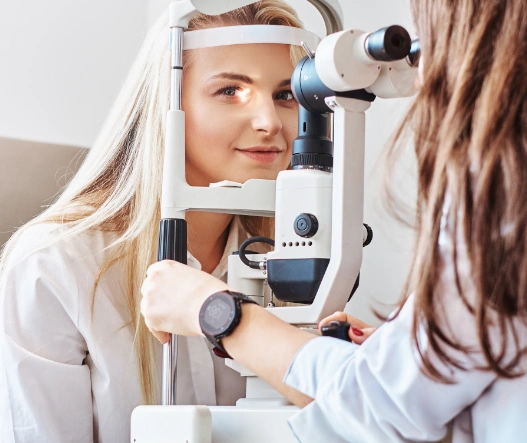
The only way to know for sure is a comprehensive eye exam. During your consultation at NY LASIK, we’ll evaluate:
Eye Health Assessment:
- Current vision prescription and stability
- Corneal thickness and shape (using advanced imaging)
- Eye pressure (glaucoma screening)
- Lens clarity (cataract evaluation)
- Retinal health (macular degeneration screening)
- Tear production and dry eye severity
Health History Review:
- Medical conditions and medications
- Previous eye surgeries or injuries
- Lifestyle factors (smoking, sports, occupations)
- Vision goals and expectations
Procedure Recommendation:
- Whether LASIK is appropriate for you
- Alternative procedures if LASIK isn’t ideal
- Timeline and what to expect
This thorough assessment takes about an hour and is completely non-invasive. Most consultations are free or low-cost.
Frequently Asked Questions
Is there an age limit for LASIK?
The FDA sets a minimum age of 18 but no maximum age. Many patients in their 70s and 80s have successful LASIK.
Will I still need reading glasses after LASIK?
If you develop presbyopia (which most people do by age 40), you may need reading glasses for close work. Monovision LASIK can reduce or eliminate this need.
Can I have LASIK if I have cataracts?
Not traditional LASIK, but cataract surgery with a premium IOL can correct your vision and may be even better than LASIK for your situation.
How long do LASIK results last?
The corneal reshaping is permanent. However, your eyes continue to age, and presbyopia will develop if it hasn’t already.
The Bottom Line: Age Is Just a Number
You’re not too old for LASIK—but your individual eye health is what matters. Many patients in their 50s, 60s, and beyond enjoy clear vision after LASIK or alternative procedures. The key is finding a surgeon who takes time to understand your specific situation and recommends the best procedure for your eyes.
At NY LASIK, we specialize in helping mature patients achieve their vision goals. Whether LASIK is right for you or an alternative procedure is better suited, we’re here to guide you through every step.
Ready to See Clearly Again?
Schedule your LASIK consultation with NY LASIK today. Our experienced surgeons will evaluate your eyes, discuss all your options, and answer every question you have—no pressure, just honest guidance.
Serving patients throughout NYC, Manhattan, Brooklyn, and New York.