
Cataract Symptoms & Treatment in NYC
When cloudy vision starts changing your day, get clear answers about your next step.
Understand your symptoms, explore lens options and plan care around the way you live. NY LASIK offers cataract evaluations for patients across New York City.
Personalized evaluation · Lens planning · Follow-up care

What is a cataract? A cataract is clouding of the eye’s natural lens. It can make vision hazy, dim colors and increase glare. An eye examination can confirm the cause. Early symptoms may be managed with glasses or lighting changes; surgery removes the cloudy lens when treatment is appropriate.
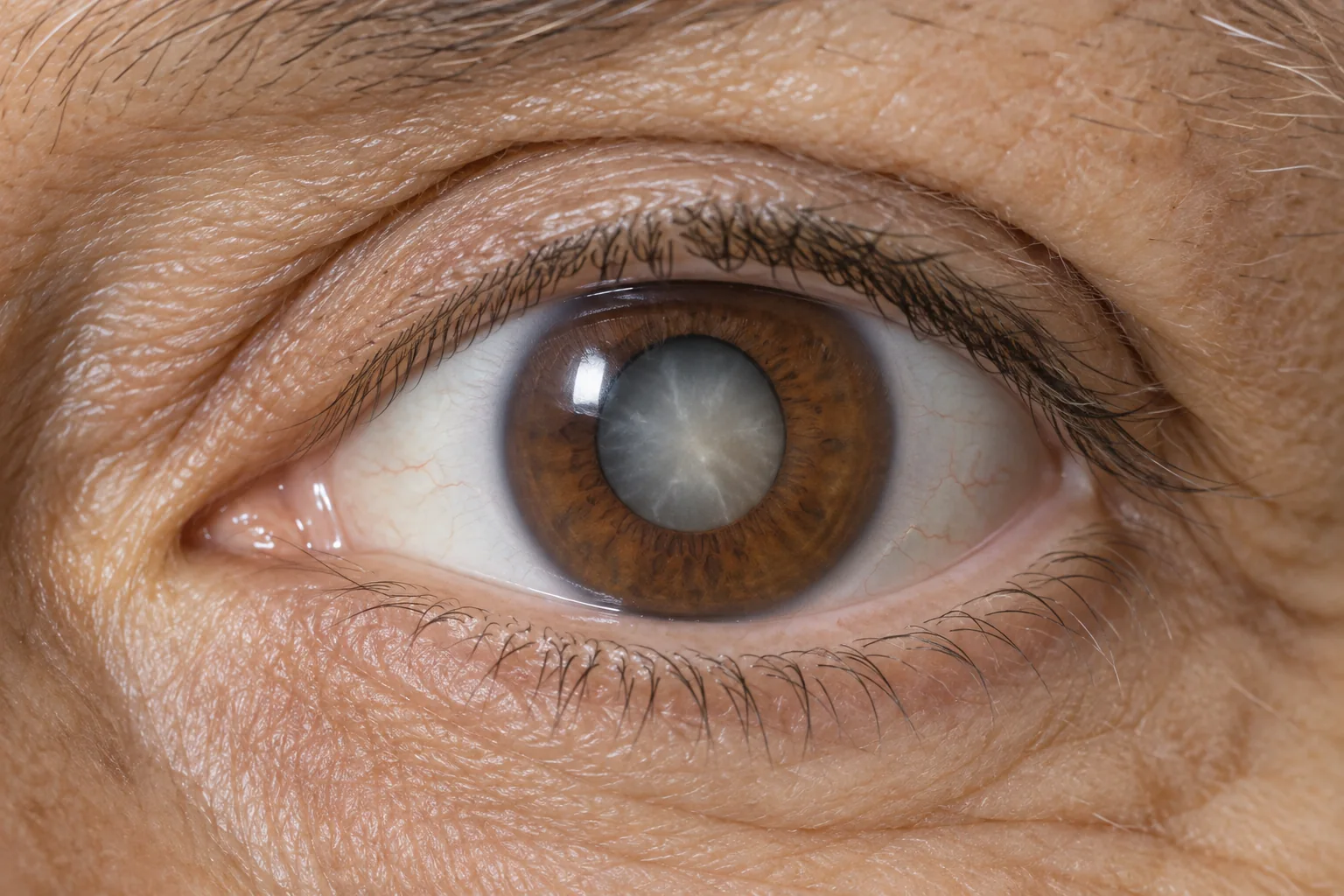
What does a cataract look like?
A mature cataract can appear as gray or white clouding behind the pupil, as illustrated here. The change is in the natural lens inside the eye.
Earlier cataracts can affect your vision while your eye still looks normal in a mirror or photograph. An ophthalmologist examines the lens to determine whether a cataract is present and whether it explains your symptoms.
You do not need to wait for visible clouding to seek care. Bring changes in reading, glare or night vision to your eye doctor’s attention.
Is cloudy vision getting in your way?
Cataracts often develop gradually. You might first notice that a restaurant menu needs more light, street signs seem harder to read or headlights feel more distracting after dark.
- Blurred or cloudy vision that persists
- Glare or halos around lights
- More difficulty seeing at night
- Colors that seem faded or less vivid
- Frequent changes in your glasses prescription
- Double vision in one eye
Bring specific examples to your appointment. Describing what has changed can be more helpful than simply saying your vision is blurry.
Sudden vision loss or significant eye pain needs urgent assessment. Do not assume a new, abrupt change is a routine cataract symptom.

Try the cataract vision simulator
Move the divider to compare the same New York park scene with and without an illustration of cataract-related haze, blur and reduced color contrast.
Use the left and right arrow keys when the slider is focused. This is an educational illustration, not a vision test, a cataract severity scale or a prediction of your surgical result. Actual symptoms vary.
Why cataracts develop
Age-related changes are the most common cause. Cataracts can also be associated with diabetes, eye injury, steroid use and other factors. They may affect one or both eyes and can progress differently in each eye.
Nuclear cataracts
Clouding develops in the central part of the lens. Vision may gradually become less clear as the lens changes.
Cortical cataracts
Cloudy areas form in the lens’s outer region. Their position and extent can influence how light passes through the eye.
Posterior subcapsular
Clouding near the back surface of the lens can interfere with reading and vision in bright conditions.
The name of the cataract is only part of the picture. Your examination, symptoms and daily needs help determine whether monitoring or treatment makes sense.
A plan starts with a thorough evaluation
A cataract consultation should explain both what is causing the blur and what an operation can realistically improve. Other conditions, including dry eye, glaucoma or retinal disease, may also affect vision.
Your vision priorities
Talk about night driving, reading, computer work, hobbies and your comfort with glasses. Bring your medication list and tell the team about previous eye procedures.
Your eye health
The doctor assesses your vision and the lens, and examines the eyes with dilation when appropriate. Additional testing depends on what the examination shows.
Your next step
Discuss monitoring versus surgery, measurements for lens selection, likely benefits, risks and follow-up. Ask for a written explanation of any optional costs.
Prepare for dilation: ask how the appointment may affect driving or work that day. Bring current glasses, relevant eye records and a short list of the tasks you most want to improve.
Monitoring or surgery?
An early cataract does not automatically mean you need an operation now. An updated prescription, brighter task lighting or magnification may help while you and your doctor monitor changes.
When cataracts interfere with activities you value, discuss whether surgery’s expected benefits outweigh its risks. The decision depends on your function and eye health, not just a birthday or a single line on an eye chart.
Do not put off an examination because you assume worsening vision is inevitable with age. The first step is finding out what is causing it.
Make the decision about your life
- Is the cataract the main cause of my symptoms?
- What can glasses still improve?
- What might happen if we monitor it?
- Which benefits are realistic for my eyes?
- What risks are higher in my situation?
What happens during cataract surgery?
The surgeon removes the cloudy natural lens and replaces it with an artificial intraocular lens, or IOL. Cataract surgery is generally an outpatient procedure. Numbing medication and an individualized anesthesia plan help keep you comfortable.
Standard and laser-assisted approaches
Laser assistance can be used for selected steps, while the surgeon still removes the cataract and places the implant. The appropriate approach depends on the eye and treatment plan. Ask what the proposed technology changes for you and whether it adds cost.
Benefits and risks belong in the same conversation
Many people see better after cataract surgery, but results depend on the rest of the eye. Risks include infection, inflammation, pressure changes, retinal problems and an unexpected prescription. Glasses or additional treatment may still be needed.
Ask your surgeon to explain your individual risk factors and how the team handles concerns after the procedure.
Compare cataract lens options
Lens selection influences how you see after surgery. Discuss the distances you use most, your tolerance for visual side effects and your overall eye health. A higher price does not automatically make an implant the right fit.
| Lens option | What it is designed to do | What to discuss |
|---|---|---|
| Monofocal | Provide a primary focus at a chosen distance. | Glasses are commonly needed for other distances. Discuss your target focus. |
| Toric | Address suitable corneal astigmatism as part of the lens plan. | Measurements, alignment and remaining prescription. Toric correction can be part of different lens designs. |
| Multifocal or extended depth of focus | Broaden useful vision across selected distances. | Reading goals, glare, halos, contrast and whether your eyes are suitable. |
| Light Adjustable Lens | Allow prescribed light treatments to adjust lens power after implantation. | Eligibility, extra visits, protective-eyewear instructions and the full treatment schedule. |
No lens guarantees that you will never need glasses. Ask which tasks may still require correction and what tradeoffs matter most for your eyes.

Experience with cataracts and vision correction
Dr. Leonard Bley, MD, FACS, is a board-certified ophthalmologist, cataract and refractive surgeon, and founder of NY LASIK. His clinical focus includes cataract surgery and lens-based vision correction.
Your consultation is the place to connect the examination findings with your goals. Bring questions about lens selection, glasses, prior LASIK or PRK, and the practical details of surgery and follow-up.
Previous LASIK or PRK? Share that history before lens measurements are finalized. Read about cataract planning after laser vision correction.
Recovery works better with a plan
Arrange an adult escort, collect your written instructions and confirm the first follow-up visit before surgery day. If a family member will help with transportation or care, include them in the conversation.
- Getting home: confirm the facility’s companion policy, including for taxis or car services.
- Eye care: use prescribed drops and protection as instructed.
- Your routine: ask separately about driving, work, exercise and travel.
- Follow-up: keep examinations even when vision seems better.
Vision may fluctuate while the eye heals. Your personal timetable depends on the procedure and other eye conditions.

Cataract surgery cost and insurance in NYC
Costs depend on your insurance, facility, surgeon and lens plan. Coverage for medically necessary cataract surgery may differ from coverage for optional refractive services or upgraded lenses.
Medicare Part B may cover surgery with a conventional IOL. Deductibles and cost sharing can apply. Ask the office and your insurer to confirm the services, network status and likely out-of-pocket amount for your plan.
Ask for a written estimate
- Surgeon, facility and anesthesia charges
- What the recommended implant includes
- Optional services and their separate fees
- Testing, follow-up and medication costs
- How each eye is billed
Confirm the estimate before choosing a treatment package. Benefits and payment responsibilities vary.
Cataract questions, answered
What are the first signs of cataracts?
Early cataracts may cause no symptoms. Later, you may notice hazy vision, glare, faded colors, difficulty seeing at night or frequent glasses changes. These symptoms can have other causes, so an eye examination is the next step.
Can glasses or eye drops get rid of cataracts?
Glasses, brighter lighting or magnification may help you function with early cataracts. They do not remove the cloudy lens. Surgery is the established treatment that removes a cataract. Ask your ophthalmologist before buying products that claim to dissolve cataracts.
When is cataract surgery necessary?
The decision usually depends on how much the cataract limits activities that matter to you and whether the expected benefits outweigh the risks. Sometimes removal is recommended to help examine or treat another eye condition. Your surgeon can explain the reason in your case.
Does cataract surgery hurt?
Numbing medication is used, and the team may give medicine to help you relax. You may notice light, movement or pressure. Tell the team if you are uncomfortable. Ask beforehand about anesthesia, anxiety and what you should expect during your procedure.
Will I still need glasses after cataract surgery?
You may. Your lens implant, target focus, remaining prescription and overall eye health influence the need for glasses. Some lenses reduce dependence on glasses for certain distances, but no option guarantees freedom from glasses for every task.
Is a premium lens always better than a standard lens?
No. A lens is useful when its benefits fit your eyes and priorities. Monofocal, toric and presbyopia-correcting options have different tradeoffs involving focus, glare, halos and cost. Ask which option best fits your night driving, reading and screen use.
Can I have cataract surgery after LASIK or PRK?
Often, yes. Tell the surgeon about all prior vision correction procedures and bring old records if available. Previous corneal surgery affects lens calculations and planning. Our cataract surgery after LASIK or PRK guide explains the questions to discuss.
Can cataracts come back after surgery?
The removed natural lens cannot grow back. The capsule supporting the implant can become cloudy later, a condition called posterior capsule opacification. If it affects vision, the doctor may recommend a YAG laser procedure after confirming the cause.
Does Medicare or insurance cover cataract surgery in NYC?
Medically necessary cataract surgery with a conventional lens may be covered, subject to plan rules, deductibles and cost sharing. Optional lens or refractive services may add out-of-pocket costs. Confirm the surgeon, facility and proposed services with your insurer and request a written estimate.
How long does cataract surgery recovery take?
Recovery varies. Vision and comfort may improve early, while healing and prescription changes continue over the following weeks. Follow the drop schedule and attend examinations. Return to driving, exercise and work only according to your surgeon’s instructions.
Can I take the subway or a taxi home after surgery?
Plan for a responsible adult to accompany you. Sedation and changing vision can make traveling alone unsafe, and a car-service driver may not meet the facility’s escort policy. Confirm transportation and companion requirements before the procedure day.
Where can I schedule a cataract consultation in New York City?
Contact NY LASIK to request an appointment in Manhattan, Brooklyn or Queens. The team can confirm the appropriate office, clinician and testing schedule. Your consultation and procedure may take place at different addresses, so verify both locations.
Manhattan, Brooklyn & Queens
Choose a convenient office to begin the conversation. Confirm where your evaluation, procedure and postoperative appointments will take place; they may use different locations.

Manhattan
160 E 56th Street, #900New York, NY 10022
Request an evaluation at our Midtown Manhattan office and confirm your testing and follow-up schedule.

Brooklyn
1301 Avenue JBrooklyn, NY 11230
Ask our Brooklyn team about cataract consultations and the next steps for your individual care plan.

Queens
98-14 65th AveRego Park, NY 11374
Contact our Rego Park office for appointment availability and instructions for your cataract evaluation.
Your next questions, in more detail
Take the next step toward clearer vision
Tell us what has changed and what you want to understand. Request a cataract consultation with NY LASIK in Manhattan, Brooklyn or Queens.
Patient education sources
National Eye Institute: Cataracts · Cataract surgery and recovery · American Academy of Ophthalmology EyeWiki: Cataract · Toric lens implants · Presbyopia-correcting implants · FDA: Light Adjustable Lens · Medicare: Cataract surgery coverage
General patient education. Your examination and your surgeon’s instructions determine the care appropriate for your eyes. This page does not promise a particular result.
The eye close-up, park, reading and family-planning images are AI-generated editorial illustrations, not actual NY LASIK patients or treatment results. Doctor and neighborhood images are from the practice’s existing website.